Your Rufus download is on the way
Rufus is on its way from the official Windows release door. The next hour covers finishing winget or the standard exe, launching the main dialog, confirming Device and Boot selection, writing a trusted ISO to a spare USB, checking checksums if you need them, skipping random mirrors, and updating through the same door you used to install.
By Rufus editorial team Current release Rufus 4.15, published June 30, 2026
Download Rufus 4.15
Pick your system and the download starts.
winget install -e --id Rufus.RufusOr take rufus-*.exe from rufus.ie or GitHub Releases. Supporting: portable rufus-*p.exe.
Two asks while the installer lands
If the project helped you, star pbatard/rufus on GitHub. Stars help other Windows users find the real repository next to lookalike names.
Follow new builds via the releases feed. The feed lists current tags and asset names so you can see when the standard exe moves without refreshing the Releases page by hand.
The first hour with the USB writer
Work the eight steps in order so you do not redo settings later. Finish the download before you chase portable extras. Confirm the main dialog opens before you blame the download. Write one trusted ISO before a large Windows media job. Updates use the same winget id or official exe you already trust. Longer install context: install on Windows, winget, and for this computer.
What success looks like
You are done with the first hour when the main dialog opens, a trusted ISO writes cleanly to a spare USB, and you know whether winget or the standard exe is your update door. Deepen with guides when you need Windows ISO advanced options or bad blocks checks.
If the target PC fails to boot the stick, re-check Partition scheme and Target system before you blame the ISO. Firmware boot menus differ by vendor. Keep the ISO so you can rebuild the stick without hunting a new download.
Common first-hour mistakes
Stacking winget and a second exe into two folders wastes time when you later wonder which binary opened. Prefer one install location. Saving personal files on the USB you plan to erase is the other common mistake. Move those files first.
Fetching a full suite helper from a search ad is the same class of mistake as fetching the writer from unofficial wrappers. The official standard exe is small and complete for desktop use. Releases list: releases. GitHub layout: GitHub.
Borrowing a locked-down lab PC can block winget and unknown executables. Stop rather than forcing a helper installer. Use a machine you control when you need a clean path.
After the hour
Next useful reads: Windows ISO options, UEFI or BIOS matching, bad blocks checks, and the guides index. Official FAQ in the project wiki covers edge cases in more depth than this install page.
Internal links: home, releases, GitHub, download safe, portable or exe, how to install winget, checksums.
When SmartScreen interrupts a Pete Batard's tool setup
SmartScreen may warn on a freshly downloaded exe. Prefer rufus.ie, GitHub Releases, or winget so the the bootable-media tool file matches upstream. Stop if a blog asks you to disable protections for an unknown publisher before the official package arrives.
If launch fails after a clean download, confirm the signed build opened once, reopen once, and avoid stacking a second renamed installer. First-hour notes and safety guides deepen that the flash-drive writer checklist.
- Finish the Windows install. Finish the Windows install. If you used winget, wait until winget install -e --id Rufus.Rufus exits cleanly. Winget pulls the current Windows x64 standard exe family from microsoft/winget-pkgs. If you took the standard exe by hand from the official site or GitHub, run it. Do not run a renamed setup from a search ad while you wait.
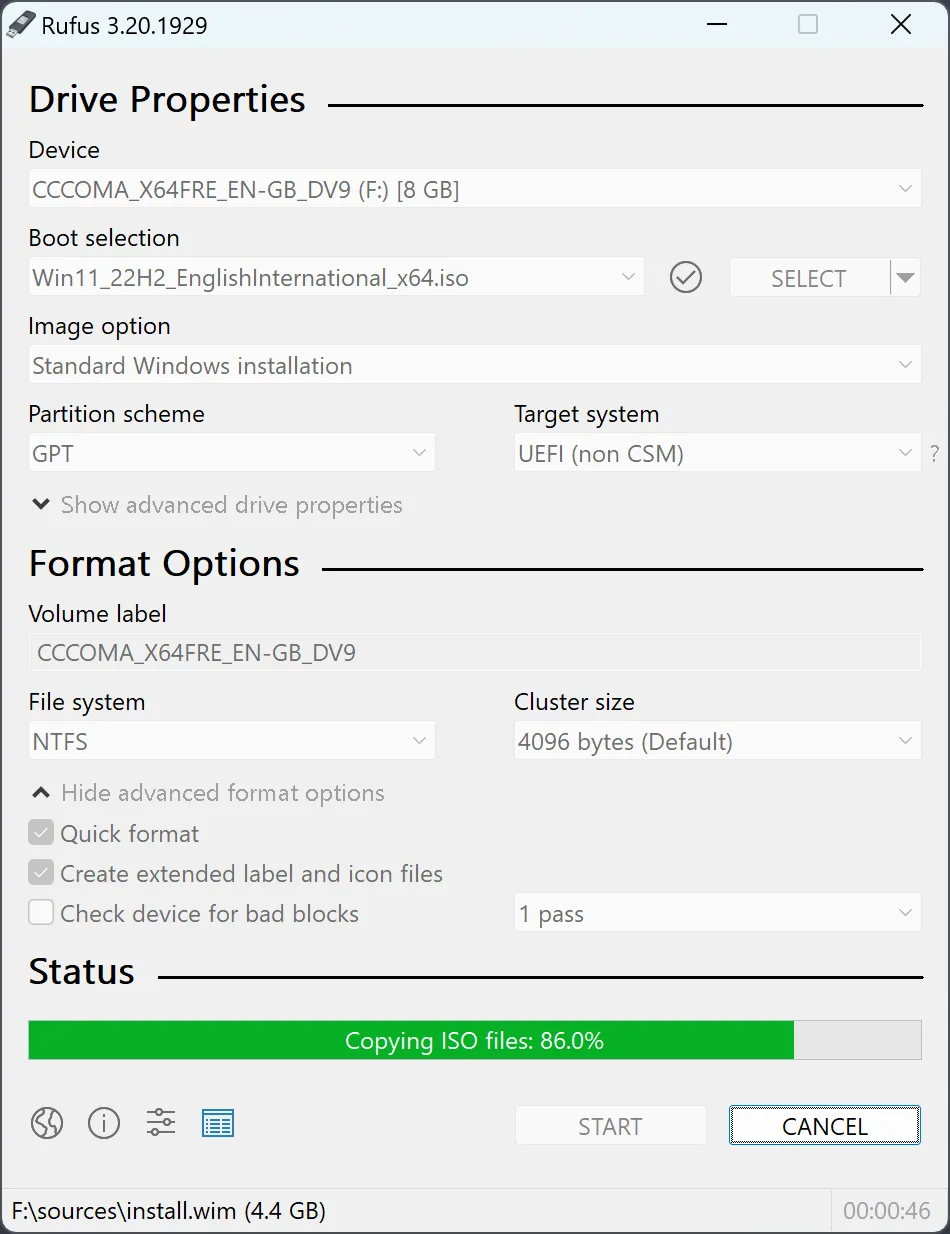
- Launch the main dialog once. Launch the main dialog once. Start the program from Start, from the folder where you saved the exe, or via the winget command entry. Pass SmartScreen only when the file came from the official site, GitHub, or winget. Confirm Device and Boot selection appear. First run: first run .
- Confirm a spare USB. Confirm a spare USB. Insert a flash drive you can erase. Select it under Device. Double-check the drive letter and size so you do not wipe a backup stick. Guides: create bootable USB .
- Select a trusted ISO. Select a trusted ISO. Point Boot selection at an ISO you already trust, or a Windows retail ISO from Microsoft. Optionally compute checksums before START. Guide: checksums , Windows ISO .
- Set Partition scheme and Target system. Set Partition scheme and Target system. Match firmware mode: GPT style paths for many UEFI machines, MBR for many BIOS-only machines. Exact labels follow the current dialog. Guide: UEFI or BIOS .
- Press START and wait. Press START and wait. Confirm the destructive warning, approve elevation if prompted, and wait for the status line to finish. Eject the USB only after the write completes.
- Skip random mirrors. Skip random mirrors. If something fails, re-fetch from the official site, GitHub Releases, or winget. Softonic-style wrappers and blog accelerators are the wrong door. Safety: is it safe . Download-safe: download safe .
- Plan the update door. Plan the update door. If winget installed the package, upgrade with winget using the same id. If you used the exe, take the newer standard exe from the same official door. Do not mix three mirrors. Update notes: update and uninstall .
Longer install notes: Windows install.
Editorial notes for the installed page
Confirm App Installer from Microsoft when the package manager command is missing. Reopen Terminal after App Installer lands, then retry the documented line. Checksums, when published, live next to assets on GitHub Releases. Read LICENSE.txt before you redistribute a modified build under GPL terms.
Keep personal photos off the spare stick you plan to erase. Prefer the official homepage, GitHub Releases, and Windows Package Manager over Softonic-style wrappers. Signed builds should show Akeo Consulting when you inspect file properties on modern Windows.
Network blips on multi-gigabyte Windows images are common enough that a hash step pays for itself. A failing bad-blocks check is a hardware problem; replace the stick rather than rewriting installers to a drive that fails verification.
Practical Windows habits that keep downloads calm
Confirm App Installer from Microsoft when the package manager command is missing. Reopen Terminal after App Installer lands, then retry the documented line.
- Checksums, when published, live next to assets on GitHub Releases.
- Read LICENSE.txt before redistributing modified builds under GPL terms.
- Prefer one install door per PC so shortcuts cannot resurrect abandoned binaries.
Keep personal photos off the spare stick you plan to erase. Label the flash drive with the OS name and the write date.
SmartScreen may warn on a freshly downloaded executable. Stop if a blog asks you to disable protections for an unknown publisher before the official package arrives.
Spare media habits for recovery desks
Keep a labeled drawer of spare flash drives that never hold family photos. Write the OS name and the calendar date on a paper tag after each successful pass.
- Color tags for installer sticks versus photo dumps.
- Paper logs for ISO hash and stick serial.
- One-time boot menu keys photographed per laptop model.
Store the ISO files you already trust on an internal archive folder with checksum text beside them. Re-download only when the vendor publishes a new retail image.
Borrowed classroom PCs may block unknown executables and package managers. Carry a known-good stick built on a machine you control rather than fighting policy on the target PC.
Elevation prompts and destructive confirms
Expect an elevation prompt when the write starts. Read the Device name carefully. The dialog warns before destroying data on the selected drive.
- Confirm Device matches the spare stick.
- Confirm Boot selection points at a trusted ISO.
- Confirm Partition scheme matches firmware mode.
- Press START only after the destructive warning makes sense.
Leave advanced Windows ISO options alone until a simple write succeeds. After the status line finishes, eject cleanly.
Checksums, fake flash, and warranty sticks
Bargain USB drives sometimes report sizes that look wrong. Upstream feature lists include bad blocks checks and help for detecting fake flash.
| Signal | What to do |
|---|---|
| Hash mismatch on ISO | Re-download from the OS vendor |
| Bad blocks failure | Replace the stick |
| Unknown publisher on exe | Stop and return to official doors |
A failing check is a hardware problem. Replace the stick. Do not keep writing installers to a drive that fails verification.
Signed builds should show Akeo Consulting when you inspect file properties on modern Windows. Prefer the official homepage, GitHub Releases, and Windows Package Manager over Softonic-style wrappers.
Fleet catalogs without dotted pins
If your workplace already pins the package through Intune or another catalog, use that channel and skip random search ads.
- Document whether each PC uses winget or a shared exe share.
- Remove abandoned folders after upgrades.
- Read LICENSE.txt before redistributing modified builds.
Catalog lag can trail a fresh upload on GitHub, so public copy says the current release rather than a dotted pin in static HTML.
Security fix names appear in release bodies when upstream publishes them. Prefer the current release. Do not invent severity scores from marketing pages.